
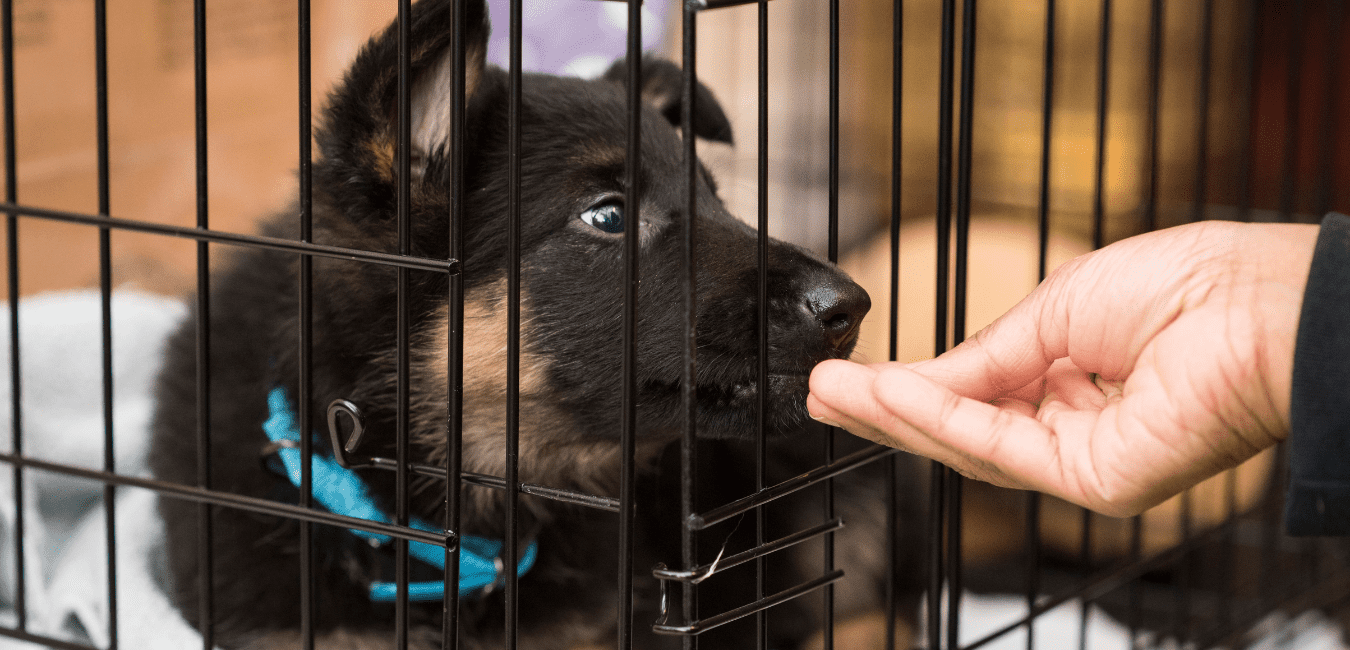
If you crate train your puppy correctly it’s going to be a great management tool. And a space your puppy enjoys spending time in and actively seeks out.
Your puppy will go to their crate to rest or have some time away from the rest of the household.
If you aren’t going to use a crate everyday that’s ok, but your puppy does need to practise relaxing in a confined area. For example, if they need surgery or visits to the groomers. You want to make sure they have a great emotional response to being in those environments for all sorts of purposes.
In this blog post you’ll learn a step by step process so your puppy LOVES going into their crate! We will also explain why crate training your puppy is important and give you tips for choosing and setting up your puppy’s crate. Oh, grab your FREE video tutorial here too!
Please note: There are affiliate links in this post. If you click a link and make a purchase I may receive a small commission at no extra cost to you. I only give recommendations for items I feel will truly benefit my audience. Thanks for supporting our blog!

Why you should crate train your puppy
When you can’t give your puppy your full attention, a crate will prevent your puppy from chewing, biting and toileting on things you don’t want them to.
Using a crate to prevent behaviour you know is going to happen saves you a lot of stress and gives you time to teach your puppy what you’d like them to do instead.
It can also help speed up the process of teaching your puppy where to go to the toilet because your pup is likely to wait until they’re away from their bed to pee or poop. However, if a puppy is left too long they’ll have no choice. It’s not a substitute for a good schedule and routine.
If your pup feels safe inside their crate it can help your puppy to relax when you leave them. And if you plan on taking your puppy with you on a stay-cation, your puppy’s crate will help them to feel more settled and will ensure your holiday home is protected.
A crate can also help if your puppy is anxious whilst travelling. Plus, it’s a secure and safe way to transport your puppy, whilst keeping your back seats free from sand and mud!
Here’s a great blog by Love Your Dog who breaks down the best crash tested dog crates for your car. Personally, I love my Lintran crates that were custom made and so expensive. But, if you’re thinking long term, a crate like these is worth investing in.

How to crate train your puppy
To set your puppy up for success make sue they’ve had chance to burn off some energy, enjoyed a calming activity, visited their toileting area and everyone in the household knows not to disturb your puppy whilst they’re relaxing or sleeping in their crate.
Step 1
Have the crate on the floor with you sitting on the floor close by. Allow your puppy to choose to come over and investigate. If your puppy sniffs it or moves to investigate, praise them and reward them with some tasty treats too.
If your puppy is hesitant don’t worry, give them time to go at their own pace and reward them where they are comfortable being. Play is a great way to boost confidence. Either play with their favourite toy nearby the crate or if they are more food motivated you can play with food too, by tossing it to one side for your puppy to go get and when they come back toss a treat to the other side of the crate.
At this stage, all movement is outside of the crate.
Step 2
Getting your puppy to happily step into the crate. You can either sprinkle some treats just inside of the crate and let your puppy approach to eat them, or an alternative if you’re playing with toys is to toss the toy so it lands partly in the crate and your pup gets to lean inside the crate a little to pick it up.
Step 3
Is all about building up duration. As your puppy goes into the crate to get a treat they will turn around inside before coming out. At this point meet their nose at the entrance and feed them a bonus treat before they leave. This will extend the time they are in the crate by a second or two.
Gradually you can start to feed a couple of treats, one after another in this way to increase duration further. You will find that your puppy chooses to hang out in the crate for longer hoping more treats will be delivered.
Continue to build duration in this way using up to 5 small treats each time. You can start to lengthen the time between delivering treats, so your puppy remains happily in their crate for longer until your puppy is choosing to stay in their crate for 30 seconds.
Step 4
Is all about getting your puppy used to the crate door being moved. To start with you’re not closing the door, but simply moving it a little when your puppy is happily eating treats inside the crate.
They’ll be aware of the sound, vibrations and sight of the crate door moving and should be relaxed throughout. You can then start to close the door over more and practice closing the catch or doing up the zip a little if you have a canvas crate.
If your puppy starts to panic or tries to leave it just means you’re going too quickly. Drop back a step and help your puppy to build up their confidence more before proceeding.
Step 5
Once you’ve built up to your puppy being happy to be in their crate whilst you close the door the next stage is building duration so your puppy is happy to relax with their crate door closed. Throughout this stage you are going to be right next to the crate to support your puppy.
Set your puppy up with a long-lasting chew to enjoy inside the crate, like a bully stick, yak milk chew or a stuffed Kong. Whilst they’re settled in their crate you can sit on the sofa next to the crate and either pop on the tv or read a book. You’ll want to practise this on several occasions before moving to the next stage.
Step 6
Is all about you moving away from the crate whilst your puppy is relaxing with their chew and it’s not being a big deal. Whilst your puppy is busy chewing, start to get up and move around the room before sitting back down on the sofa again. Move to different areas of the room and back each time.
You don’t need to say anything to your puppy as you do this. Pick up a magazine from the table, turn the lights on, switch the tv on or tidy away items. If your puppy watches you at first they will soon get used to things happening around them and go back to their chew instead.
Step 7
Is where you can start to leave the room with your puppy settled in their crate with something to do. Start with short durations, like going to the bathroom, or taking a quick shower and then build up to longer durations. If your puppy can happily settle in their crate for a few minutes, move to 15 minutes, then 30 minutes.
Practise increasing the duration gradually in 15 minute intervals and if you’re leaving your puppy for any length of time ensure that they have eaten, exercised, had a chance to toilet and are relaxed before you go.
A quick note…
Crate training your puppy at night to during the day is going to be different.
You need to spend as much time teaching both if you want to leave your puppy relaxing in their crate whilst you go to work.
I don’t recommend leaving your puppy inside a crate for longer than 3 hours during the day. Having someone pop in and walk your puppy for half an hour then putting them back into their crate for longer is going to result in negative outcomes and you don’t want to go down that road.
Crate training your puppy is a process. They’re highly unlikely to go into their crate and love it straight away. Be careful not to rush any stage of the steps above. Watch your puppy’s body language closely and if they are feeling anxious go back a step. Your puppy needs to trust you!
If you’d love a video tutorial of this exact step by step process to crate train your puppy and learn more about how to care for and raise your puppy the right way, sign up to watch my Puppy Start Right Workshop below.

Tips for choosing a crate
There are 3 types of dog crates to choose from; fabric, metal and plastic. Each having their own pros and cons.
I recommend the MidWest Life Stages metal crate because it comes with a divider. A variety of sizes are available.
I love that this fabric crate from Petsfit has a window at the top. Great for next to your bed during those first few nights. Your puppy can look up to see you and you can pop your hand inside to help settle them.
This plastic crate from Amazon Basics also has an opening top section.
And if you have room, a puppy play pen like this from Ellie-Bo, is a fantastic addition to your puppy’s safe space.
You may choose to invest in two different crates; for example a metal crate, for longer term use, and a smaller fabric crate to have in your bedroom, so your puppy is close by those first few nights. This would be for short term use.
You don’t need to buy these brand new. Look on your local sell and seek Facebook pages and speak to family and friends with dogs. They may have a crate you can buy from them, gathering dust in their garage that’ll easily wipe down.
The type of crate you choose for longer term use should be big enough for your puppy to fit in comfortably when they are fully grown. They’ll need to be able to stretch out.

Tips for setting up your puppy’s crate
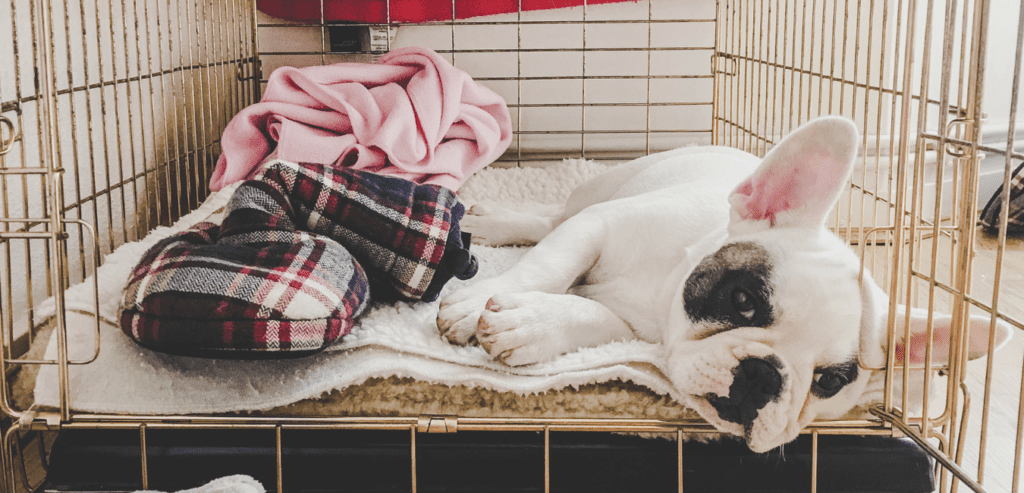
To prepare, make sure that your puppy’s crate is lined with something cosy and soft, like non-slip bedding so that it’s inviting and warm. If you put your puppy’s bed inside the crate, just make sure it’s easy for smaller breeds to get in and out of.
You’ll need to put a water bowl inside the crate either on the base or you can buy water bowls that attach to the side of a metal crate. You’ll also need a couple of toys and chews. If you won’t be around to supervise your puppy, make sure they’re safe for your puppy to be left alone with; Kong’s and West Paws Toppl’s are great!
Placing a large throw or blanket over your puppy’s crate to create a cosy den can be beneficial too.
You need to put your puppy’s crate in a convenient, but quieter part of the house. So, your puppy can still see and hear what’s going on, but is able to relax as well. It’s also a good idea to have it reasonably near to their toileting area for quick access.
This blog post has given you a step by step process so you can start crate training your puppy today! We’ve also discussed why it’s important to crate train your puppy and given you tips for choosing and setting up your puppy’s crate.
I’d love to know if this blog post has helped you! Please let me know in the comments below.
Don’t forget to grab your FREE video tutorial inside my Puppy Start Right Workshop. We will also take a detailed journey together into how to raise, socialise and train your puppy to give them the best start.
If you enjoyed this article please share it! And check out my related posts below.
Happy training!
Lindsay xx


0 Comments