
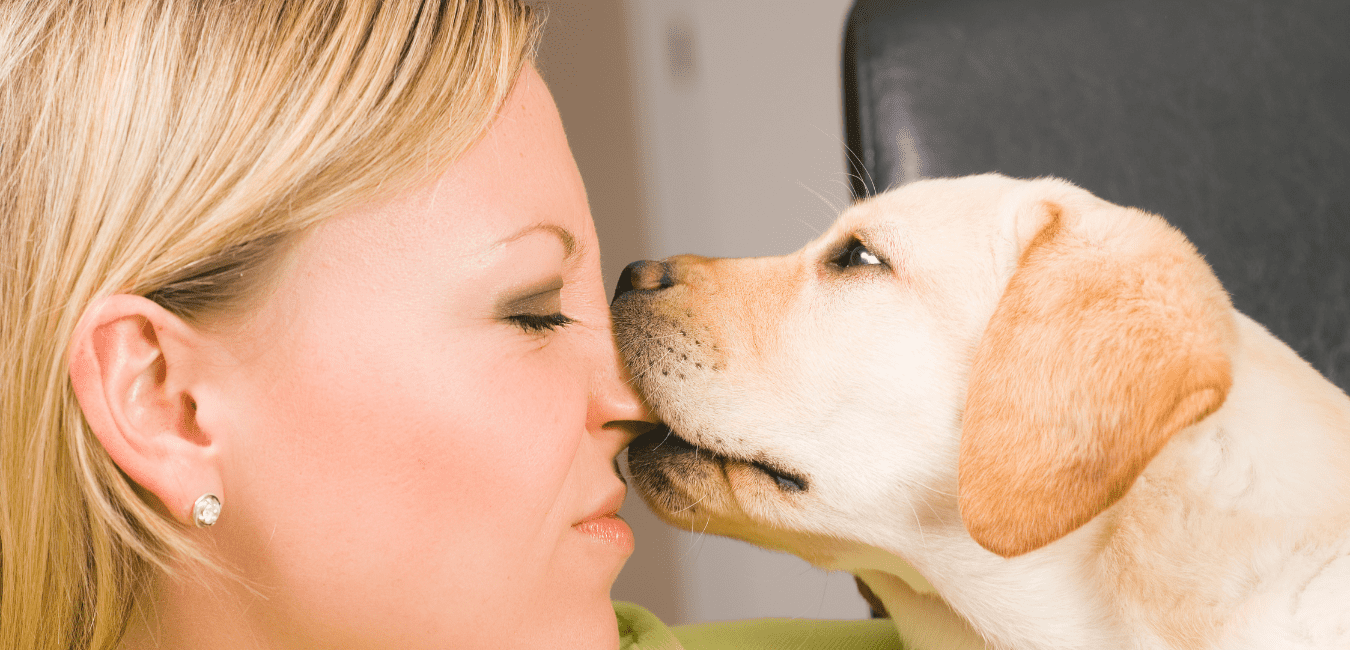
Puppy biting can make those early weeks with your new puppy a total nightmare.
You feel you’re doing something wrong or there’s something wrong with your puppy. Things you thought would be enjoyable; stroking, cuddling, playing, putting a lead or harness on your puppy turn into you becoming a pin cushion and your puppy a land shark!
Puppies have small needle-like teeth that leave marks on your skin. It looks like you’ve gone swimming with piranhas. It’s painful, frustrating, and stressful.
But they don’t understand what they can and can’t put their teeth on. You know this. So what can you do about it?
I want to make this clear from the get go – you can’t stop puppy biting and keep your relationship sacred.
Puppy biting is a totally normal behaviour and they will grow out of it. But your pup won’t forget if you frighten or hurt them.
The good news is with these 5 simple steps, you can reduce puppy biting considerably AND continue to build the single most important thing with your new 4-legged friend – TRUST.
Please note: There are affiliate links in this post. If you click a link and make a purchase I may receive a small commission at no extra cost to you. I only give recommendations for items I feel will truly benefit my audience. Thanks for supporting our blog!

5 reasons why puppies bite
It’s important to know why puppies bite. It helps us to understand our puppies’ needs and how we can help them.
Instinct Dog Behaviour and Training agree, “there are some common reasons puppies display biting and mouthing behaviors beyond just normal puppy development. The good news? Once you know the reasons, there are some simple adjustments you can make to decrease those bitey behaviors AND help your puppy feel better at the same time. It’s a win-win!”
1. Puppy biting is normal behaviour. Puppies explore the world with their mouths, just like toddlers. It has nothing to do with dominating you or another member of your family. This theory has been debunked!
2. They’re overtired. When puppies become overtired they simply don’t know what to do with themselves. They’ve “lost the plot”.
3. They’re communicating something to you. Maybe your puppy feels scared, frustrated, bored or they’re just saying, “leave me alone”. Some puppies bite because they’re hungry or need to go to the toilet.
4. They’re playing. Puppies use their mouths when they’re playing; chasing, grabbing and pouncing. This can quickly turn into overexcitement and they become boisterous.
5. They’re teething. Puppy biting is usually worse between the age of 12weeks – 16weeks. This correlates with the peak of teething. By the age of 8 weeks your puppy has all of their milk teeth. Their permanent teeth push out the milk teeth, plus 14 extra teeth! The whole process takes 6-7months.
If you think about it in human terms; a toddler spends most of their time putting keys, remotes, toys and anything else they can get their hands on into their mouths.
It takes years for our milk teeth to fall out and to have a full set of adult teeth.
Our puppies go through this stage of development in a noticeably short period of time. It’s up to us to teach our puppies what to bite and to set them up to be successful.

FREE PUPPY START RIGHT WORKSHOP
A deep dive into how to raise and train your new puppy from day 1 in a kind and effective way.
“The workshop is absolute GOLD!”
Click the button below to sign up!
*I’ll never share your details with a third party!*
5 steps to reduce puppy biting
Step 1 – Make sure your puppy gets enough sleep.
- Puppies need around 18hours of sleep over 24hours. Most puppy biting happens when they are over tired.
- You need to create a positive association with their crate. So, you can put your puppy to bed when you know they’re ready for a nap. You can learn how to do this in my blog article, How to crate train your puppy (landingonyourpaws.co.uk).
- Keep a diary of the amount of sleep your puppy has had / is having.
- Note when biting episodes happen, so you can put a plan in place and put your puppy to bed before they happen. Here’s an example plan that can also be used during the day.
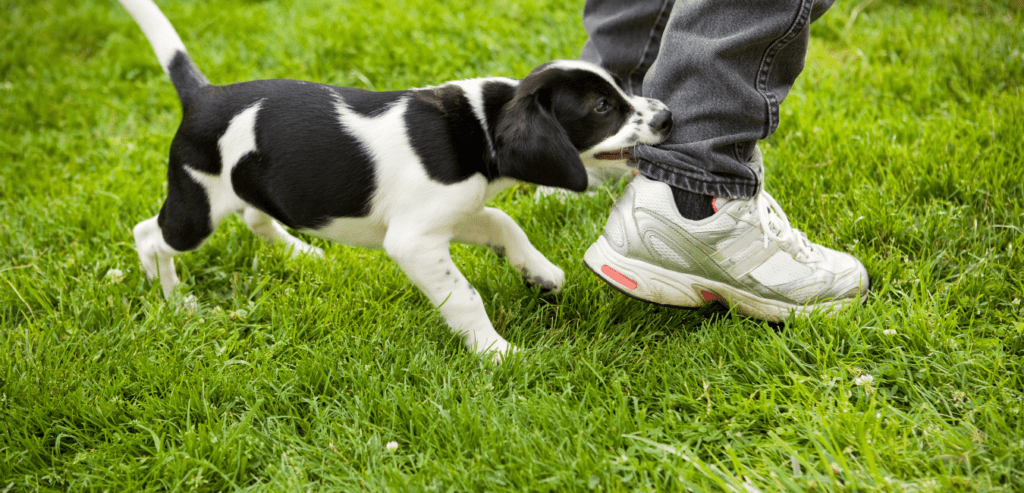
Step 2 – Be consistent
- Remain calm and don’t say anything.
- Give your puppy something they can bite.
- Getting cross, saying ‘ouch’, yelping or saying ‘no’ to your puppy doesn’t help. Your puppy either views this as attention, which is most likely reinforcing, and then it gets repeated or they learn you are dangerous. This is damaging to your relationship with your puppy and doesn’t teach your puppy what to do instead.
- If you give your puppy something they can bite and their teeth go back on to your skin or clothes stop what you are doing. Play and fun time ends when this happens. Walk out of the room if you need to and count to 10.
Peach on a leash advise, “if your puppy bites you, you need to ignore the behavior and remove *yourself* from the interaction, with no drama”.
Step 3 – Provide legal chew items
- Ideally, you need to give your puppy something they can bite BEFORE they bite you. Switched on puppies will learn, I bite then the toy appears. Look for the signs, observe where, when and ask why?
- Have a range of toys handy around the house, on shelves and in your pocket. Rotate the toys your puppy has out on the floor / in their crate with the ones you have handy. So when they are given one from a shelf for example, they haven’t seen it in a while and it’s exciting.
- Buy appropriate chews, freeze carrots, make ice cubes and put their Kong in the fridge or freezer to provide some soothing relief from erupting teeth. Always supervised!

Step 4 – Provide mental stimulation and enrichment throughout the day
- Training is mentally tiring for your puppy and they feel good doing it! Their sleep will be better quality, they will feel more relaxed, calm and stimulated. So, whatever it may be, spend a few minutes training several times a day.
- Enrichment provides your puppy with the same ‘feel good’ hormones as training. So, be creative with how you feed your puppy. Always supervised! Give them recycling items to tear up, throw around, hide food, use puzzles, snuffle mats and licki mats or take them on a sniffari!
Step 5 – Manage your puppy’s environment
- Buy a crate and build a positive association with the crate right from the start.
- Often, investing in a puppy pen or a baby gate is also a good idea. Especially if you have children. Again, you need to build a positive association with this area.
- If your household is busy in the morning, your puppy doesn’t need to be in amongst it, getting themselves into trouble. Take them to their crate / pen with a Kong and let them relax in there.
- Prevention is always better than cure!
I hope this article gives you a better understanding of why puppies bite and how you can reduce it by following my 5 simple steps.
And if you’d love a puppy biting checklist you can print off and share with the rest of your family, enter your details below and it’ll be in your inbox in no time!
I’d love to know in the comments below if this blog post has helped you!
And if you enjoyed it please share it and check out the related articles below.
Happy training!
Lindsay xx


0 Comments