
I’ve said this before, but I’ll say it again…
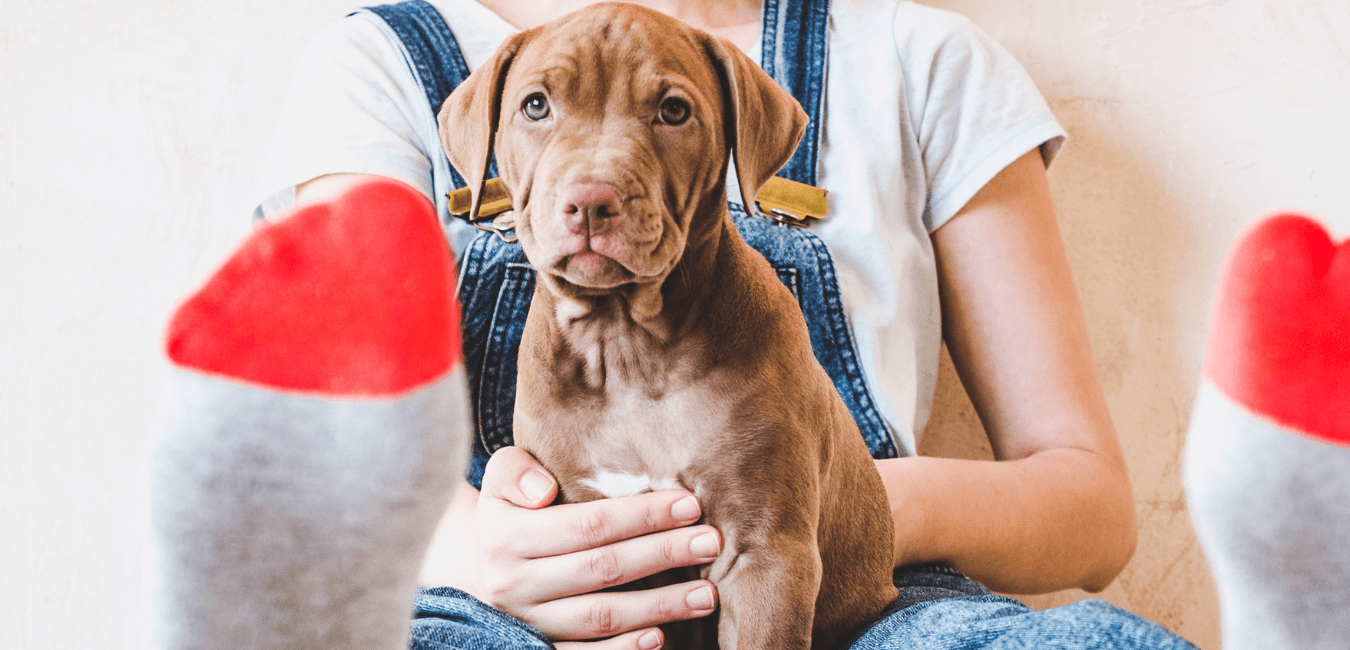
When you bring home your new puppy it’s like bringing home a new born baby. It’s tough! You step into a world of the unknown.
Of course there are differences;
- A human baby is all about sleep, eat, poop, repeat. They’re learning, but not at the same rate as your puppy.
- At 8 weeks of age, your new puppy is soaking everything up like a little sponge.
- They’re learning if things are safe, if things are dangerous, they’re going to make that entire emotional blueprint by the age of around 12 weeks.
- They’re learning what works and what doesn’t work.
So, starting your new puppy’s training straight away and in the right way should be high on your priority list.
If you don’t, how do you expect to achieve that vision of life with your new puppy?
- The companion dog
- The walking buddy
- The team mate in dog sports
- The therapy dog
In this blog post, we’ll share the 6 biggest training mistakes new puppy parents make. So you can shine a light on your own and take steps to fix them. But firstly, we’ll cover why it’s important to STOP.

Why your new puppy needs you to STOP making training mistakes
I made a fair few mistakes with my own puppy. And through those mistakes, I’ve learned. I’ve learned a lot!
I’ve craved the knowledge and skills I needed back then.
And I’ve decided to make it my mission to educate new puppy guardians and arm you with the facts, the strategies and the ability needed to start your puppy’s training in the right way.
So you don’t look back and feel the same guilt and heart ache.
Because I know you’ve already fallen in love with your new puppy and you want to do the very best for them. And bringing home a new puppy isn’t as easy as you thought it was going to be.
When you don’t have the knowledge and skills to train your puppy in the right way things can go from bad to worse quite quickly.
When you continue to make training mistakes you;
- Damage your relationship with your puppy.
- Teach your puppy you aren’t to be trusted.
- Risk behaviour challenges in the future
- Risk the possibility of rehoming your beloved new family member
And you might think, this is never going to happen to me and my puppy.
But read this…
“New data reveals that 1,800 people have called Dog’s Trust over the past three months, all looking to give up dogs under the age of one. Between December 27 and December 28 alone, they received 114 calls about giving up dogs, with 19 of these being puppies under nine-months-old. One in five owners who purchased or adopted puppies during lockdown said they had not considered long-term responsibilities, according to research carried out by Kennel Club”
You can read the full article here by Alice Dear – Surge of ‘lockdown puppies’ bought during pandemic being sold or given to rescue homes – Heart
So, instead of forging ahead alone, I’d love to show you a better way. These learnings are exactly what I teach my clients too, who lead a life full of adventure, enjoyment, understanding and happiness with their canine companion.

6 biggest training mistakes new puppy parents make
1. Having unrealistic expectations
This is a big one and where training can really fall apart.
Expectations can often be way too high of a young puppy and way too low on the human side of things. You can’t expect your puppy to learn where to go to the toilet for example, if you don’t teach them, supervise them and put management strategies in place to prevent accidents happening.
You need a solid schedule and routine in place so your puppy knows what’s what and can learn to trust you.
Make time for this during those first few weeks and get it running like clockwork. Keep a diary and make adjustments where necessary.
“You get out what you put in”
On the flip side of this, expectations can sometimes be too low and excuses can be made, such as “he’s only a puppy” and “he will grow out of it”.
Your puppy is learning at an exceptional rate.
Examples include;
- they put their paws up on you and get attention
- they chase and bite a certain person and they turn into the best squeaky toy
- if they pick up a slipper they get a great game of chase
Be mindful of what your puppy is learning when you are at home, when they’re interacting with members of the family and when you’re out and about.
Because you can be sure that behaviour that has been reinforced will get repeated and your puppy is making associations with people, dogs, other animals, objects, surfaces and smells ALL OF THE TIME.
Positive and neutral exposure is key during this stage.
And be aware of behaviour that is cute or funny right now, is not going to be in a few months time.

2. Using the word ‘no’
Your puppy does not speak English or any other human language for that matter. They communicate with us through their body language and its up to us to understand this and teach it to our children. If you do, you will find raising your puppy so much easier!
‘No’ is not a behaviour like a ‘sit’ or ‘down’, but again, we would need to teach this first, using positive reinforcement techniques, before adding the cue and expecting our puppies to understand it.
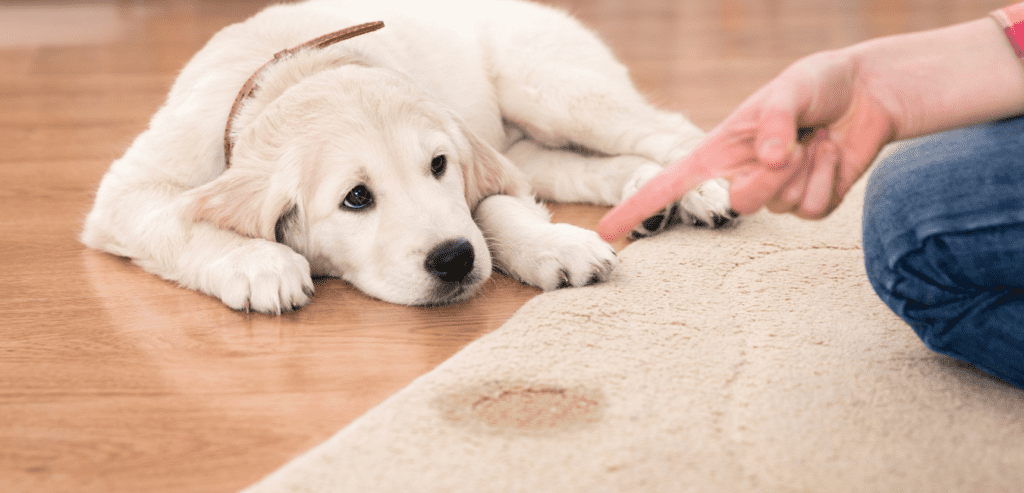
Now, you might think this works because your puppy might stop what they were doing. But honestly, it doesn’t. Your puppy stops what they were doing because of your body language, facial expression and tone of voice. They can then associate you with ‘not safe’ and will choose to chew your trainers, jump up on people and toilet indoors when you aren’t there.
This is also extremely damaging to your relationship and is not a road you want to go down.
Again, having a solid schedule and routine in place will go a long way. Alongside effective management strategies, teaching your puppy behaviour you do like and learning to communicate with them in a way they understand!
3. Waiting for something to go wrong
I know, I know, I’ve been banging on about being a proactive puppy parent recently. But this stuff, 100% results in less stress, less money spent, less embarrassment and more payments into your relationship bank account with your puppy.
It’s a no brainer!
And if you haven’t read any of my posts recently and don’t have a clue what I’m going on about, where have you been?
I’ve shared this post “The DANGERS of delaying off your puppy’s training”. Go on, head over there right now if you want your eyes wide open.
When something goes wrong we choose to take action. We are compelled to find a solution, it’s human nature.
But, having the knowledge and skills to prevent unwanted behaviours in the first place and teach the behaviours you do like, gives your puppy an increased chance of growing up to be a happy, confident and well-behaved dog.
And who doesn’t want that, right?
Go against the grain, what others have told you, and make your decisions based on scientific facts and your gut instinct.

4. Not learning dog body language
Or worse still…
- ignoring it
- punishing it
We need to be our puppy’s advocate. Their safety net. Their trusted person. How can we do that if we don’t learn their language?
We need to speak up for our puppies or they will be pushed into a place where they need to very clearly tell you, your child, a stranger or another dog to “back off”.
If these signs are ignored things will escalate. If they’re punished, they can escalate further or your puppy can shut down completely. Which is a very sad outcome.
Statista.com reported a total of 8,903 hospital admission episodes for dog bites and strikes in England from April 2019 to March 2020. The highest numbers in ages 50 – 59 and 0 – 9.
A dog will give warning signals before a bite, nearly every single time.
Take the time to learn about dog body language. There’s multiple info graphics and videos online, just make sure they’re from a reputable source. There’s also some fantastic books for children you can buy, very reasonably priced.
And don’t be fooled into thinking that certain breeds won’t bite.
Observe your puppy. Watch for changes in the environment and how they respond to them. You may need to give your puppy more space and more time.

5. Not using management effectively
Often puppies are left to have the run of the house and this causes a whole heap of problems and safety issues.
For example;
- toileting in the hallway
- not have a quiet and safe sleeping / resting space away from children
- access to other animals
- chewing on electric cables
- jumping off sofas and stairs
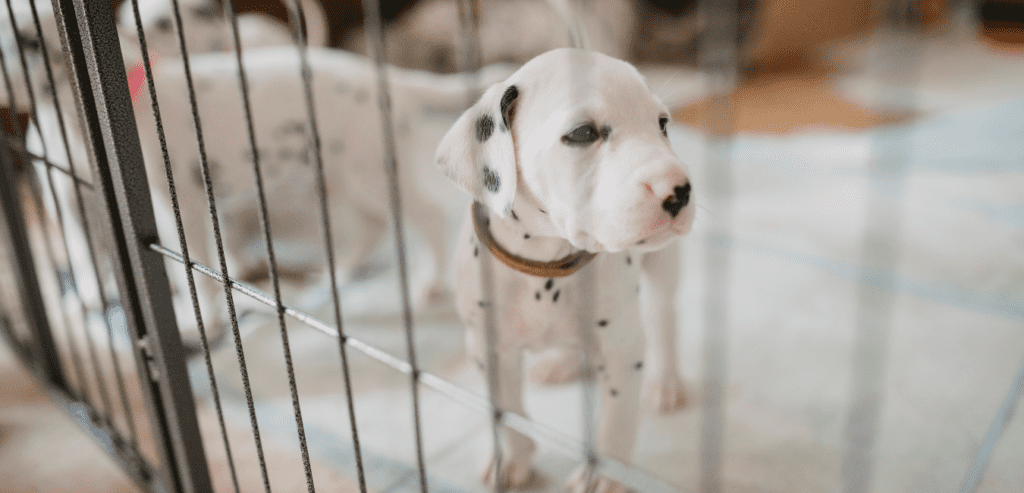
If you are not actively supervising your puppy, they should be in their safe space.
Prevention is always better than cure.
- How can your puppy poop on your favourite rug if they’re in their puppy play pen?
- How can your puppy pick up an empty food wrapper off the table if you always put rubbish in the bin?
- How can your puppy run out of the front door if they’re behind a baby gate?
Have a variety of management strategies in place, such as baby gates, a puppy play pen or an indoor lead attached to the back clip of a harness, whilst you teach your puppy the behaviour that you do like. Then gradually remove management.
6. Not giving enough time
Raising a happy, confident and well-behaved puppy is a job in itself.
Having a week off work is not going to cut it. Even if you now work from home, you need to have plenty of time during the day to ensure all of your puppy’s training needs are met.
And don’t forget those first sleepless nights. Getting up and focusing on your job is not going to be easy.
Yes, they sleep a lot and they absolutely need that sleep. But, in order to implement a solid schedule and routine and train your puppy in the right way, you need to have enough time to dedicate to your puppy.
Before you even decide on bringing a puppy into your life, you need to think about this realistically. Don’t allow your heart to over-rule your head because the consequences can be devastating.
If you’ve already brought your puppy home, plan ahead and make arrangements;
- Will you be asked to go back into the office in the future?
- Can you change your routine to better accommodate your puppy’s needs?
- Can you ask family and friends to help?
- Will you need to employ a dog walker?
But remember this, your new puppy needs YOU. No matter what arrangements you do put in place, remember at the end of a long day at work, it will be you your puppy wants to play with, explore with and learn with.
And if you don’t, the wonderful relationship, the connection, the trust, the respect will fade away.

Well, that’s it for my biggest training mistakes.
If you’ve read this article and thought, I do that and I do that as well. You’re not alone. These are common mistakes I see EVERY SINGLE DAY. And they’re biggies. Chat to me about it in the comments section.
But now you’re in a position where you can take the advice and make a plan to improve things for you and your new puppy.
And if you’d really love to switch this up and turn it around.
- A way to achieve that vision you have of life with your puppy.
- A way to unlock a relationship that will never be forgotten.
You can find the key inside my Puppy Wise Academy membership.
A treasure chest full of puppy training gold.
There’s no pirates here though!!
Just kind, simple and effective puppy training advice, tutorials, support and coaching.
You can find out exactly what’s included and what you’ll get by clicking the image below.
I’m ready to welcome you to the new, superior and more effective approach to training your puppy.

Fun and effective puppy training. Feel confident about raising the pup of your dreams!
If you enjoyed this article, please share it! You might also like the related articles below too!
Happy training!
Lindsay xx


0 Comments